
A useful model to examine
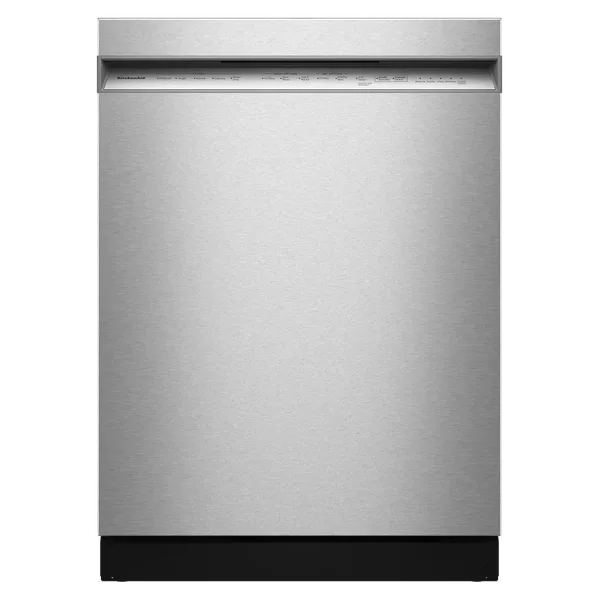
The US KDFS324SPS has a manufacturer-rated 41 dBA sound level and a Third Level Jet Rack. KitchenAid describes dedicated jets for items such as mugs and cereal bowls, plus an adjustable middle rack. It is a sensible showroom candidate for households whose loads contain more than flat plates.
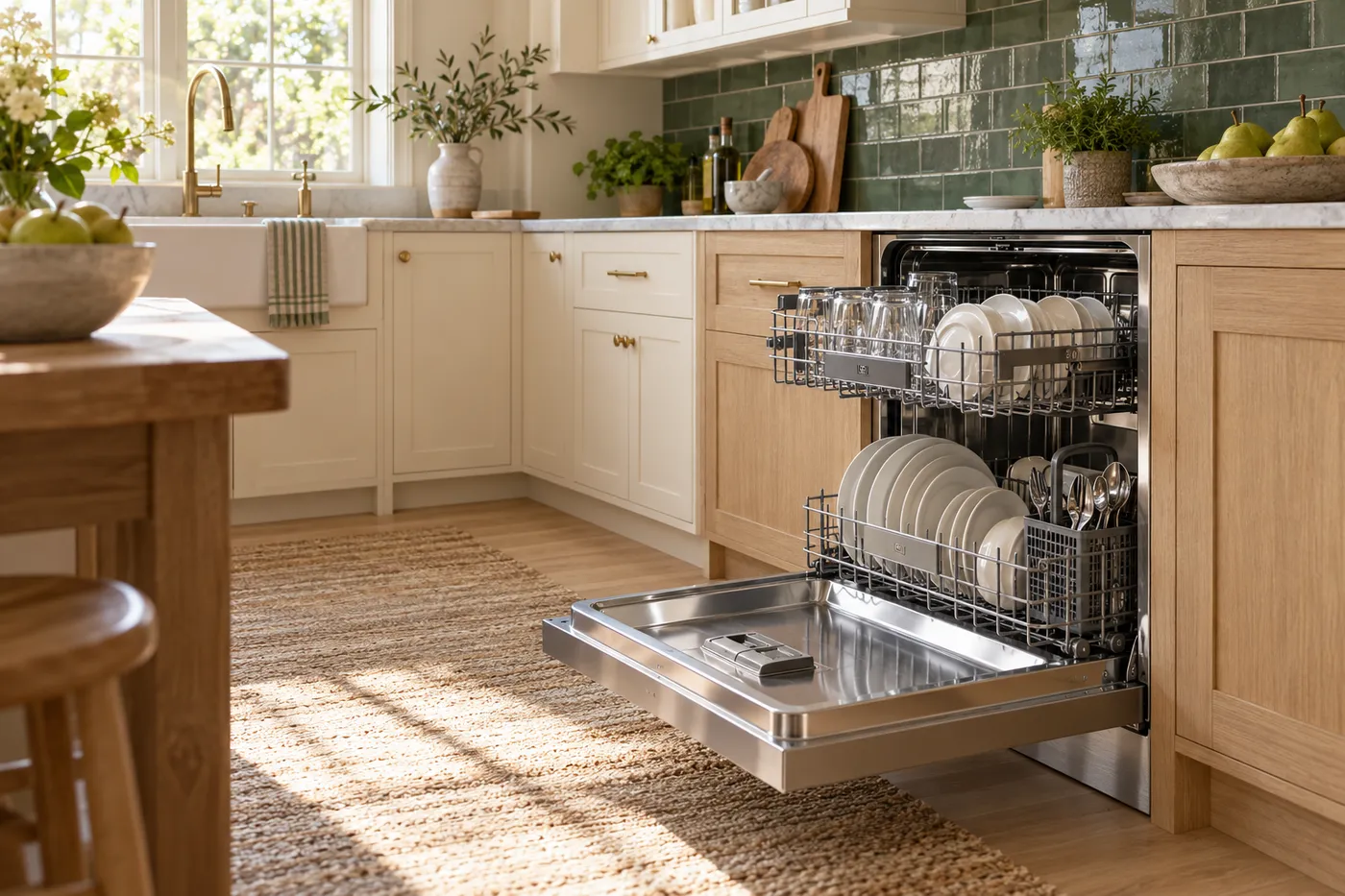
Bring the dimensions of your favorite mugs and bowls. A deeper top rack only helps if those items fit while leaving enough clearance below. Check whether a tall pitcher and large dinner plate can be loaded together after adjusting the middle rack.
Understand the drying controls
KitchenAid describes ProDry as combining a heating element, water-repellent technology and natural ventilation. The ProDry or ProDry Max setting activates the corresponding drying option. Treat this as a feature description, not a promise that every recessed plastic lid will emerge dry. This model also offers automatic door-opening drying, which matters in a narrow walkway.
Ask which cycles allow your preferred drying option and how much time it adds. If you start the machine after dinner and unload it in the morning, a longer full cycle may be acceptable. If you need the same containers again quickly, cycle compatibility matters more than a headline jet count.
Where to be cautious
Do not transfer a sound rating from an abbreviated “324” reference or a similarly named top-control model. Use 41 dBA for KDFS324SPS unless its exact documentation changes. Compare handle hardware, control placement and clearance; these affect daily use even when two machines share a family name.
Our buying position is to shortlist KitchenAid for loading flexibility, then compare an actual loaded rack with Bosch or LG at a similar installed quote. We have not established a brand-wide cleaning or reliability winner. A specification list cannot resolve local technician availability, parts lead times or how your own dishes fit.