


The fit advantage
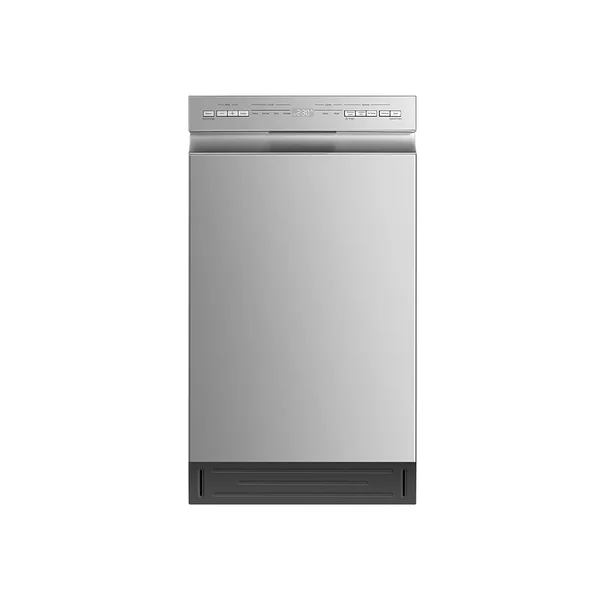
The width in a product name is a category, not a cutout measurement. Midea MDF18A1AST, for example, is marketed as an 18-inch machine but has its own published appliance dimensions. The installation drawing controls the opening, height adjustment and connection space. Flooring added in front of an old machine can complicate removal and replacement.
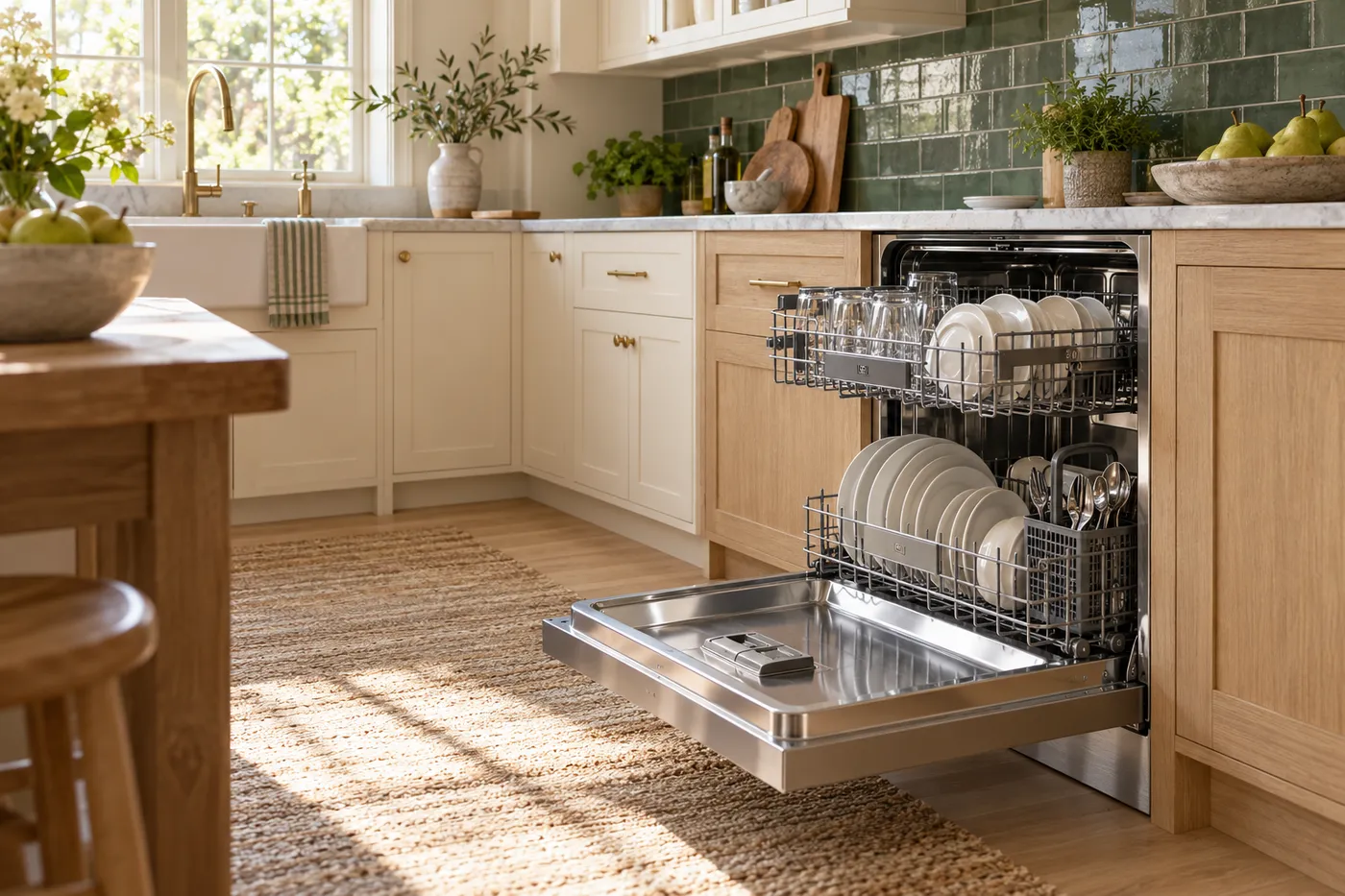
Choose a narrow built-in if you want a permanent under-counter appliance. Choose a narrow rolling portable only if you need temporary sink connections. Similar widths do not make those installations interchangeable.
A model worth examining
Midea MDF18A1AST is a practical starting point for a narrow built-in comparison: the official listing specifies eight place settings, heated drying and no third rack. Its marketing illustrations and specification table disagree about some rack adjustments, so inspect the rack or obtain written confirmation if that feature matters.
The specification-led attraction is useful capacity in a restricted opening. The drawback is less room for a mixed load of cookware and tableware. A narrow machine may need another cycle when a larger one would handle everything together.
Evaluate loading before features
- Bring measurements of your widest pan and tallest plate when comparing rack diagrams.
- Check the cutlery basket footprint; it competes with other items for rack space.
- Confirm whether raising an upper rack sacrifices the clearance you need above it.
- Ask for exact-model installation instructions, not a generic brand diagram.
- Compare the complete installed price with cabinetry changes required for a wider alternative.