

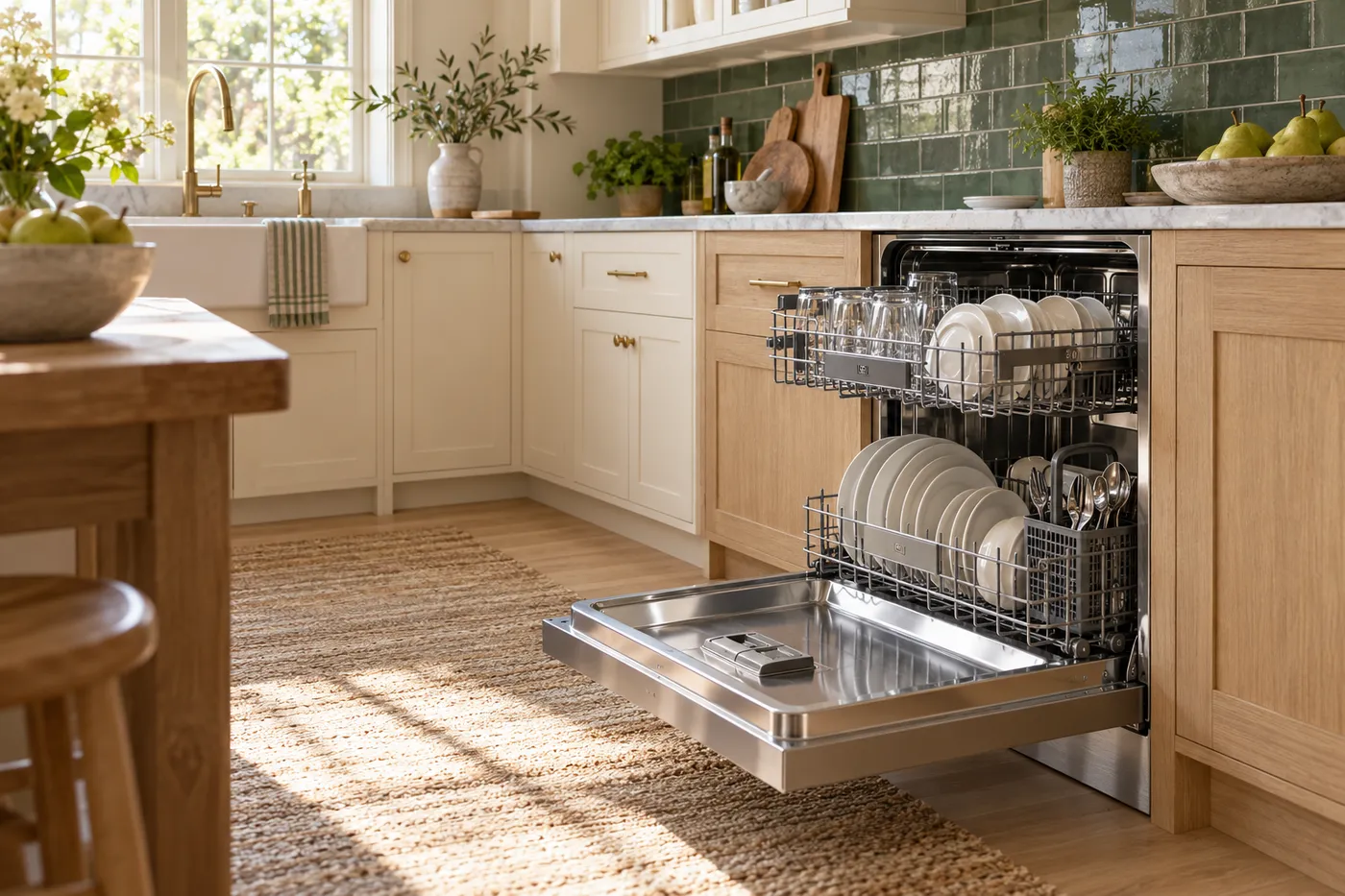
Normal, automatic and heavy
Normal is the sensible baseline for an everyday mixed load. Automatic or sensor programs adapt their operation to conditions detected by the machine. Heavy programs are intended for more demanding soils. The names alone do not establish a common temperature or water use across brands.
Start by identifying what failed in the previous load. Food remaining on a pan points to a different problem from droplets on a clean plastic lid. Changing every option at once makes it difficult to learn which adjustment helped.
Quick does not mean most economical
A short cycle trades against other resources and may not include the drying routine you expect. Read the cycle table for your exact model before assuming the shortest program is the lowest-cost one. Whirlpool notes that incoming temperature, soil and selected options can change total duration.
Use the display as an estimate rather than a deadline. If dishes are needed for a particular meal, allow time to unload safely and check that the quick program is suitable for the load. Do not force a heavily soiled casserole into a light-duty cycle simply to save time.
Options are not interchangeable
Extra dry, high-temperature wash and sanitizing options solve different tasks. Check compatibility with the selected cycle and the dishware. A sanitizing claim should be tied to the model and its documented conditions; it is not permission to machine-wash every delicate item.
Delay start changes when the program begins, not the nature of the wash. It is useful only when the schedule also suits your household and any utility tariff. Follow the appliance’s unattended-use and household safety guidance.
Build a repeatable routine
Choose one appropriate baseline, load consistently, use the directed detergent dose and note the result. For persistent poor cleaning, check spray-arm clearance and filter care before treating a longer cycle as the only remedy. If the program repeatedly stops or shows an error, consult the troubleshooting instructions.