

Single versus double
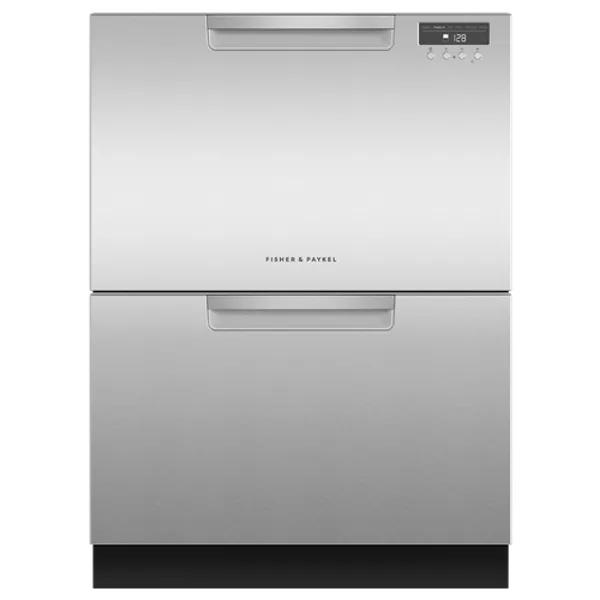
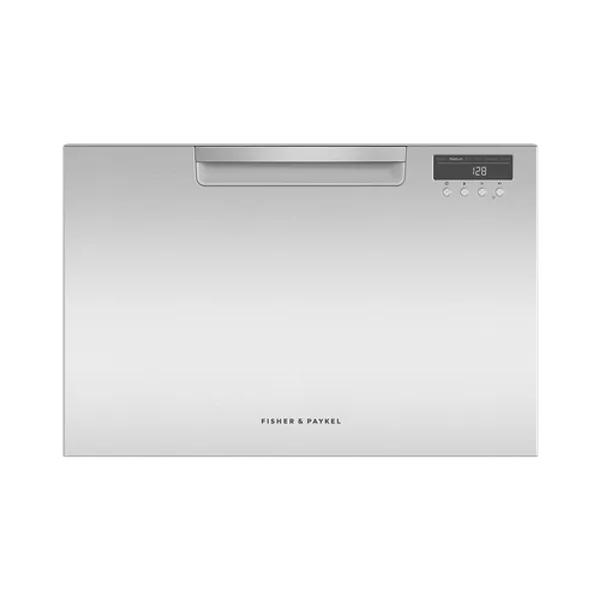
Fisher & Paykel’s US DishDrawer range includes single and double configurations. A single drawer can suit a compact kitchen or a secondary cleanup area, provided it holds the everyday load. A double drawer lets you separate loads and operate the drawers independently.
The DD24DAX9 N is one documented double-drawer example. Its manufacturer specifies seven place settings per drawer. That is useful for comparing configurations, but it does not show how your serving bowls and pans will fit. Drawer depth and maximum plate size deserve more attention than the combined headline capacity.
Where the layout helps
A higher drawer can reduce bending for some users, especially when its position is planned with the surrounding counters. Two drawers can also separate a small lightly soiled load from more heavily used cookware. Those are workflow benefits; they are not proof of superior cleaning or lower annual consumption.
Try the drawer movement and loading position if possible. Consider where a person stands while the drawer is open and whether reaching the rear is comfortable. A lower second drawer does not automatically share the ergonomic advantage of the upper one.
Compromises to accept
Tall stockpots, baking sheets and unusually large plates can be more challenging than in a conventional rack arrangement. Compare your largest items with the actual loading limits. Panel-ready variants also need the correct panel dimensions and hardware.
Before buying, confirm local service coverage for the exact model and understand the drain and mounting requirements. Select the configuration because its layout fits your routine, not because a second drawer looks like a free doubling of capacity.