

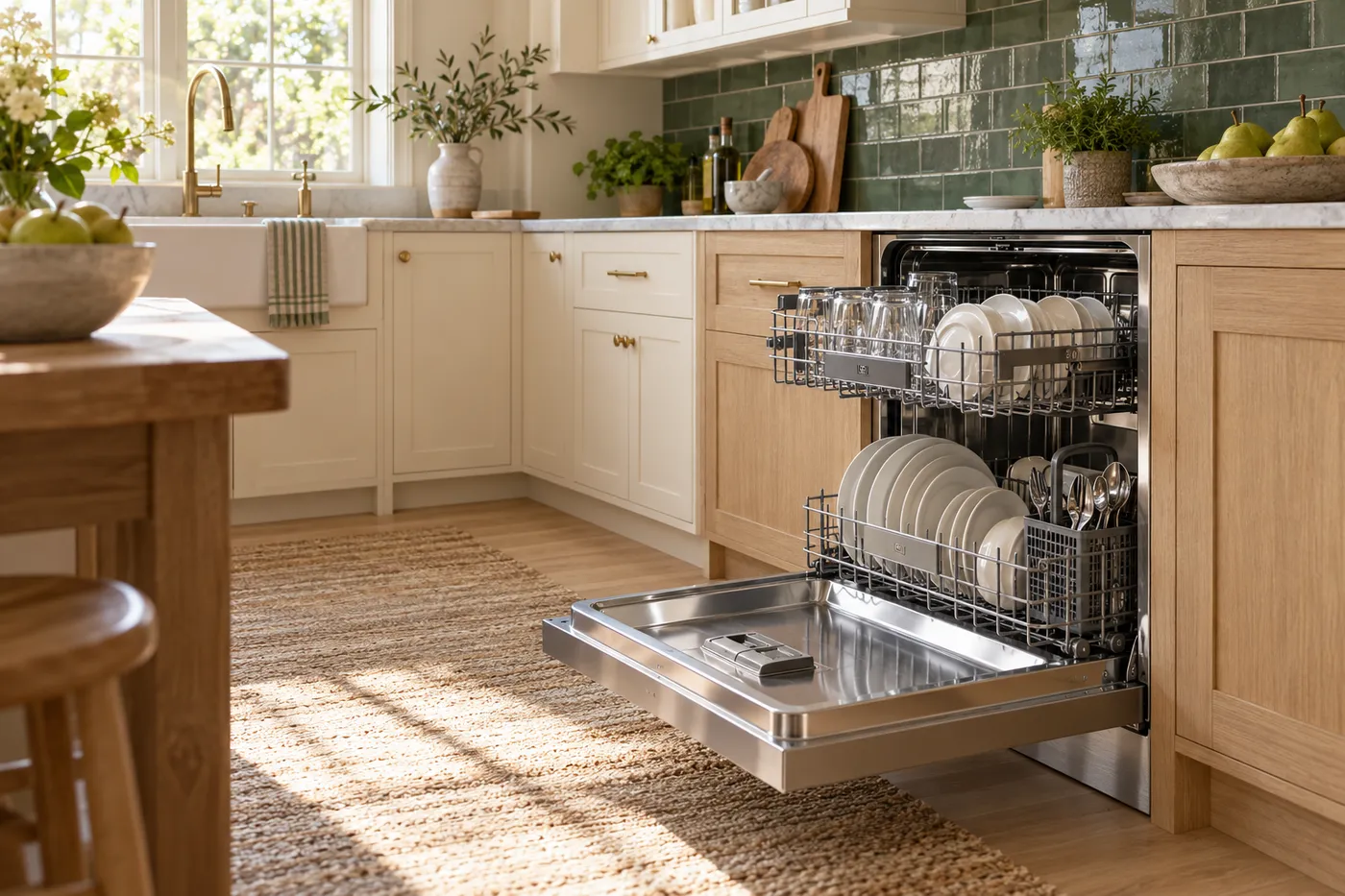
Loading features come first
An adjustable upper rack can help alternate between tall glasses and larger plates below. A third rack creates a place for utensils, but also changes available height. Inspect the rack in the positions you would actually use.
Folding tines matter when your bowls and cookware need the space they release. A specialised holder is useful only if the item fits securely and remains within the appliance’s loading instructions. Bring measurements of your awkward pieces.
Drying can be a meaningful upgrade
If plastic containers dominate your loads, compare the exact drying systems and relevant independent findings. If you mostly wash ceramics overnight, a more basic drying arrangement may already suit your routine.
Automatic door opening also affects room use. Ask whether you would be comfortable with a partly open door in the chosen location before treating it as an unconditional benefit.
Smart controls need a purpose
An app notification can be convenient, but check which settings are available directly on the machine and which require an account or connection. A feature you rarely use should not outrank simple controls that everyone in the household understands.
Connected features can change over time. Buy primarily for the appliance’s core operation and documented local controls, and review app requirements if a specific remote function matters to you.
Spend last on cosmetic matching
A matching handle or finish can complete a kitchen, but verify whether the chosen variant changes controls, dimensions or cost. A custom-panel machine is a different installation commitment, not just another colour.
Our preferred order is fit, rack usefulness, drying, comfortable sound, local service and then optional conveniences. Move an item higher only when it solves a clear problem in your home.